
Driving in Paros is easy by Greek island standards — genuinely. The main roads are paved and well-marked, distances are short, and outside the two town centres traffic is light. But there are island quirks worth knowing before you turn the key. Here's the local briefing we give every renter.
The roads
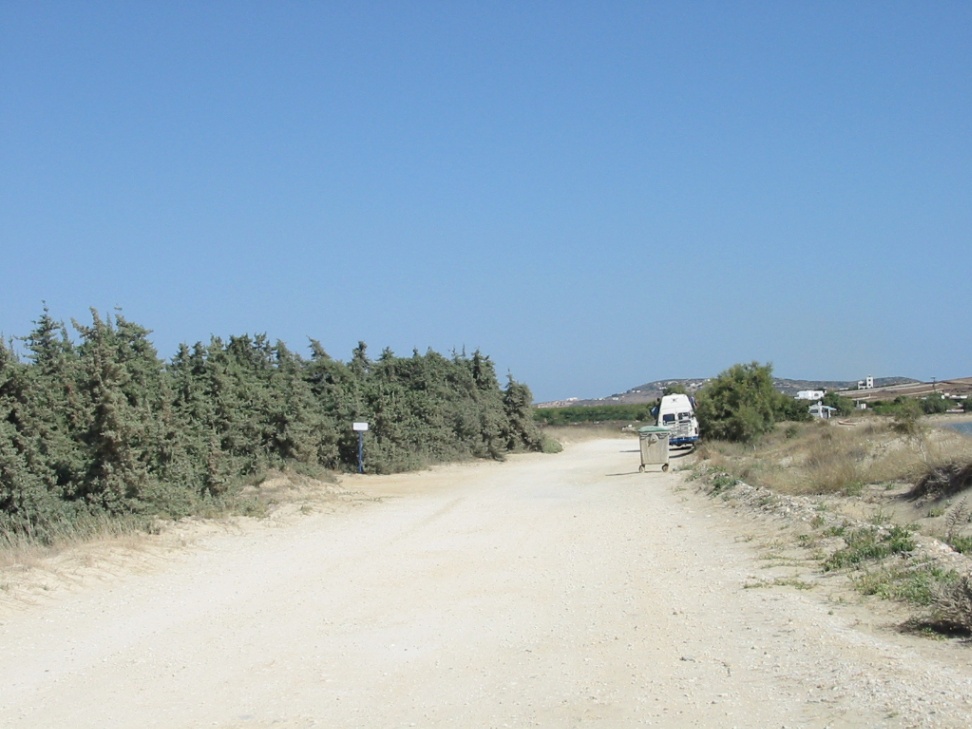
Paros has a simple road logic: a coastal ring road circles the island, and a mountain road cuts across the middle through Kostos and Lefkes. Both are asphalt and in good condition. Off these, expect narrower village approaches and some graded dirt tracks down to quieter beaches — passable in a normal car at low speed, more fun in an SUV or quad.
- Longest drive on the island: Naoussa to Aliki, about 40 minutes. Nothing is far.
- Speed limits: 50 km/h in towns, up to 90 on open stretches — signposted lower on bends.
- Fuel: stations sit on the edges of Parikia and Naoussa and along the ring road; most close by late evening, so don't hunt for petrol at midnight.
Parking: the only real challenge
- Naoussa: never drive into the old town — lanes end in staircases. Use the large free lot above the town (5 minutes' walk down) or the harbour-edge lots outside peak hours.
- Parikia: free lots along the waterfront north and south of the port fill by evening in August; arrive before 7pm for dinner parking or walk 10 minutes.
- Beaches: informal dirt lots at nearly all of them, free. Kolymbithres fills by 11am in peak season — go early or late.
- Lefkes: park at the entrance lots; the village itself is pedestrian.
Local driving etiquette
- The hazard-light wave: locals double-park with hazards for a bakery stop. Be patient; you'll do it too by day three.
- Let the bus win. On village approaches, the KTEL bus takes priority by physics. Pull in at the wide spot and wave.
- Goats, quads and rental scooters share the ring road. Assume the vehicle ahead may stop for a photo — because it will.
- Wind matters: on meltemi days (July–August) hold the wheel firmly on exposed ridges and go easy on roof boxes and quad speed.
Licences, rules and paperwork
- EU licences are valid as-is. Non-EU visitors (US, UK post-Brexit rules vary by rental company, Australia, etc.) should carry an International Driving Permit alongside their national licence.
- Minimum age with us is 21 with a licence held for at least a year (23 for larger categories).
- Seatbelts always; phone only hands-free; drink-drive limit is 0.5‰ (0.2‰ for licences under 2 years) — tavern nights mean a designated driver.
- Third-party insurance is included with every Car Hire Paros vehicle, and we do a daily safety check on the fleet. See cars and terms.
Taking your car to Antiparos
The one island crossing you're allowed (and encouraged) to make: the Pounta car ferry shuttles every half hour, and our cars can ride it to Antiparos. Buy the vehicle ticket at the kiosk, line up, drive on — the crossing takes about 10 minutes.
Frequently asked questions
Is driving in Paros scary?
No — it's one of the gentler Cycladic islands to drive. No caldera cliffs, no chaotic ring road. If you can handle a quiet rural road at home, you can drive Paros.
Do I need an SUV in Paros?
Not for the main sights. An SUV or quad adds comfort on the dirt tracks to quieter southern beaches and more presence on windy days, but compacts handle 90% of the island happily — and park more easily.
Can I drive in Paros with a US licence?
Yes, paired with an International Driving Permit (get it from AAA before you fly — it's a 15-minute errand at home, impossible to fix on the island).
Cover image: brunobarbato, CC BY 3.0, via Wikimedia Commons.